Article: October Birthstone: A Guide to Tourmaline
October Birthstone: A Guide to Tourmaline
If you were born in October, you have two birthstones to choose from: opal and tourmaline. Opal is the traditional choice. Tourmaline is the modern one, and it is the stone we would point most people towards for jewellery that will be worn often. It comes in more colours than almost any other gemstone, it is tough enough for regular wear, and a good one has a clean, bright sparkle that suits both gold and platinum.
This guide explains what tourmaline is, the colours you can choose from, how it compares with opal, and how to pick an October birthstone gift, including ideas for a daughter or a new baby.
What is the October birthstone?
October has two birthstones. Opal has been linked with the month for centuries. Tourmaline was added to the jewellery trade's birthstone list in the early twentieth century, and pink tourmaline in particular is now widely given as the October stone. Neither is more "correct" than the other, so the choice comes down to colour, taste and how the piece will be worn.
Tourmaline is also the traditional gemstone for an eighth wedding anniversary, which makes it a thoughtful choice beyond birthdays.
Tourmaline colours: pink, green and everything between
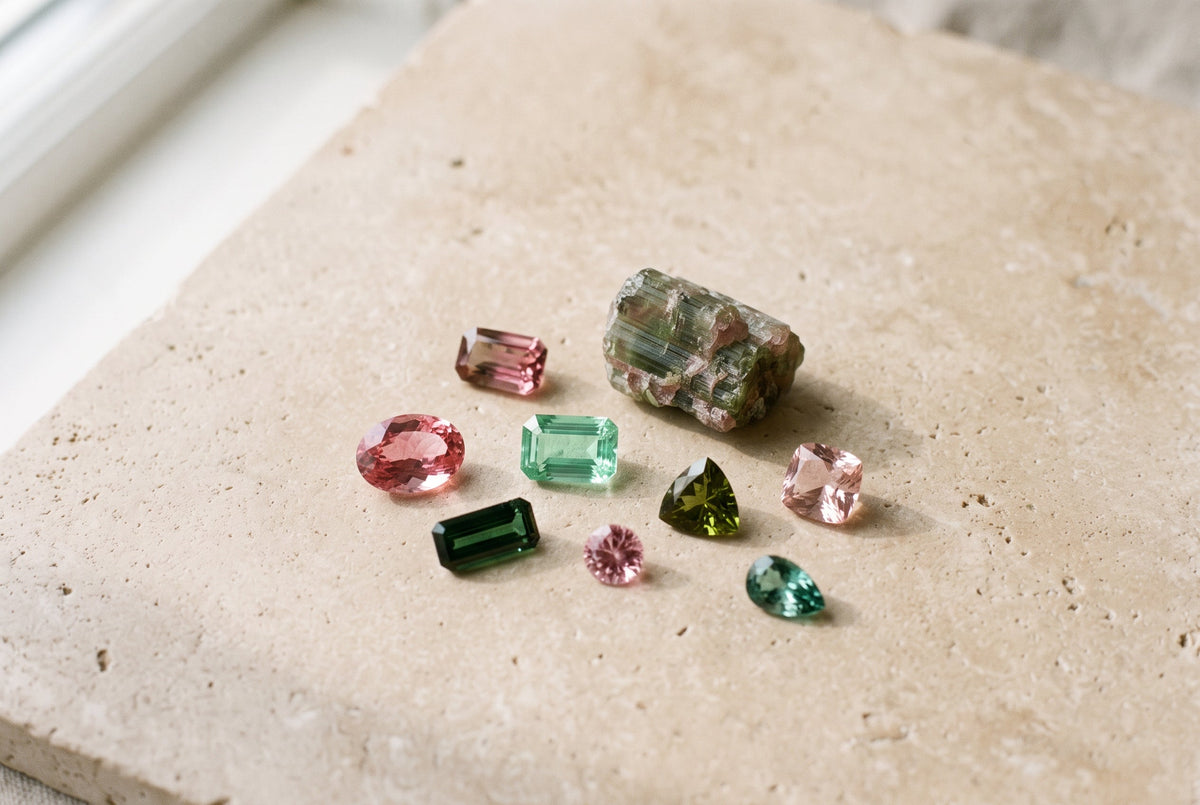
The name tourmaline is thought to come from a Sinhalese word meaning "mixed gems", because early traders found stones of so many colours together. That range is still its greatest appeal. The main colours you will come across are:
- Pink tourmaline: from soft blush to vivid raspberry. This is the colour most often sold as the October birthstone. Deep pink to red stones are sometimes called rubellite.
- Green tourmaline: from pale mint to deep forest green. A lovely alternative to emerald, with a brighter, clearer look and usually fewer visible inclusions.
- Blue tourmaline: known as indicolite, in shades from teal to inky blue. Less common than pink or green.
- Paraíba tourmaline: a rare, copper-bearing variety in an electric blue-green, first found in Brazil in the 1980s. It is among the most valuable of all coloured gemstones.
- Watermelon tourmaline: a single crystal with a pink centre and a green rim. Usually cut in slices to show both colours.
Because every colour counts as tourmaline, you are not tied to pink. A mint green or deep green stone is every bit as much an October birthstone, which helps if the person you are buying for does not wear pink. Our tourmaline rings include mint and green stones as well as a pink tourmaline ring, each set with diamonds in 18k gold or platinum.
Tourmaline or opal: which should you choose?
The two stones could hardly look more different. Opal is soft and milky with flashes of shifting colour. Tourmaline is transparent and faceted, so it sparkles in the way a sapphire or emerald does.
The practical difference is durability. Tourmaline measures 7 to 7.5 on the Mohs scale of hardness, which is similar to many gemstones used in everyday jewellery. Opal sits at around 5.5 to 6.5. It scratches more easily and does not like knocks, sudden changes in temperature or very dry conditions.
As a rule of thumb, opal suits earrings, pendants and occasional rings. Tourmaline is the better choice for a ring that will be worn regularly. You can read more about how different stones compare in our guide to gemstones.
How to choose a tourmaline
With coloured gemstones, colour matters most. Look for a shade that is rich and even across the stone, without looking so dark that it turns inky indoors. Tourmaline often shows a slightly different tone when viewed from different angles, which is natural and part of its character.
Clarity varies by colour. Green and blue tourmalines are often very clean to the eye. Pink and red stones commonly have small natural inclusions, and these are accepted as normal provided they do not dull the stone.
The setting matters too. A halo or cluster of diamonds adds brightness and helps to protect the edges of the centre stone. Yellow gold warms up green tourmaline, while platinum and white gold give pink and mint stones a cooler, crisper look. Our guide to precious metals explains the differences.
The Real Gem tip: think about where the piece will be worn. Some tourmalines that glow in daylight look noticeably darker under indoor lighting in the evening.
Is tourmaline expensive?
Tourmaline is generally less costly than a sapphire, ruby or emerald of similar size and quality, which is part of its appeal. You can often choose a larger centre stone for the same budget. Price depends mainly on colour, size and clarity: stones with a rich, even colour and few visible inclusions cost more. The exception is Paraíba tourmaline, which is rare enough to be priced alongside the finest gemstones. In a finished piece, the metal and any diamonds set around the stone also make up a good part of the price.
October birthstone gifts for a daughter or a new baby
Birthstone jewellery is one of the most personal gifts a parent or grandparent can give, and October gives you plenty of freedom with colour.
For a daughter's milestone birthday, such as an 18th or 21st, a tourmaline ring or pendant in her favourite shade is something she can keep for life. If the ring is a surprise, our ring size guide will help you work out her size.
For a new baby, the gift is usually a keepsake to be put away until the child is older, or a piece for the mother to wear. A small pink tourmaline pendant or a pair of simple studs marks an October birth beautifully. Fine jewellery is not suitable for babies or very young children to wear, so think of it as something to hand over on a later birthday.
We can make a piece like this to order. Choose the colour of the stone, the metal and the style, and we will design it around your budget.
Caring for tourmaline jewellery
Tourmaline is easy to look after. Clean it with warm water, a drop of mild washing-up liquid and a soft brush, then dry it with a lint-free cloth. Avoid ultrasonic and steam cleaners, and keep it away from strong heat.
Store it separately from harder stones such as diamonds and sapphires, which can scratch it. Take rings off for the gym, gardening and heavy housework. There is more advice in our jewellery care guide.
Finding your October birthstone
Our jewellery is made in 18k gold or platinum, and every piece is UK hallmarked, with free, fully insured UK delivery and gift packaging included. If you have a particular colour or design in mind and cannot see it in the collection, book a free bespoke consultation and we will help you create an October birthstone piece that is entirely your own.